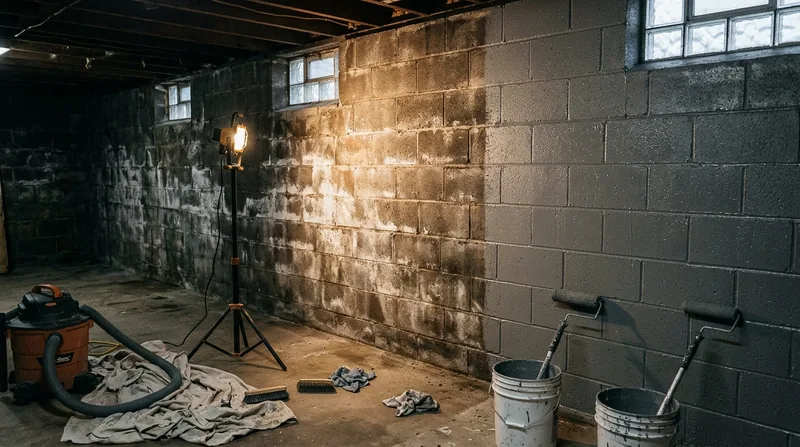




If your basement walls in Hammond feel damp, show white powder, or weep after a hard rain, Basement Wall Sealing in Hammond is usually the first thing to look at. Most of this city sits on flat lake clay and sandy silt left by glacial Lake Chicago, with a water table that stays high and pushes moisture into every joint, tie hole, and hairline crack. In the 1900s to 1930s frame bungalows and two-flats of Robertsdale and the older east side streets, walls are stone, brick, or early block, and they wick water like a sponge. The 1940s and 1950s brick ranches in Hessville and the south side have the same problem in partly finished basements. Sealing is not a cure for everything, and we say so up front. It stops dampness, dusting, and surface seepage when the wall itself is the source. When water is coming from hydrostatic pressure under the footing, we tell you that honestly and point you toward the right fix. Call Hammond Waterproofing at (219) 228-8921 and we will look at the wall before we sell you anything.
Why Basement Wall Sealing Matters in Hammond's Glacial Clay and High Water Table
Hammond is flat and low, and the Grand Calumet, Little Calumet, and Wolf Lake back up after heavy rain. That pushes the water table against basement walls from the outside, and older block and brick walls absorb it. Efflorescence, that chalky white bloom, is the visible sign that water is moving through the masonry. Sealing those walls slows the wicking and protects the surface, but it works best when we first read the wall and rule out a pressure problem.
- We remove efflorescence and loose parging before any sealer touches the wall, because sealer over salt bloom will peel.
- We identify whether the moisture is surface condensation, wicking through the masonry, or active seepage from hydrostatic pressure.
- We seal tie holes, form joints, and hairline cracks with the right material instead of painting over them.
- We tell you when sealing is not enough and an interior perimeter drain is the honest answer.
That inspection step is what separates a sealing job that lasts from a coat of paint that fails by the next spring thaw.
Key info: A 1920s brick two-flat in Robertsdale with white bloom on the east wall is a sealing candidate. The same wall with water running across the floor after a July storm is a pressure problem, and sealing alone will not stop it.
For official guidance on when foundation and drainage work needs a permit, check the City of Hammond building department before work begins. Rules vary by jurisdiction.
How We Seal Basement Walls in Hammond, Step by Step
We start with a free basement inspection and a moisture read of the wall, not with a sales pitch. On a 1950s Hessville ranch, that means checking the block courses, the floor joint, and the window wells before we decide what the wall actually needs. If the wall is damp but sound, we prep and seal. If pressure is the driver, we say so and walk you through the alternatives.
- We inspect the wall, floor joint, and any visible cracks, and we check for efflorescence and prior paint or sealer.
- We remove efflorescence, loose parging, and failed coatings so the sealer bonds to sound masonry.
- We fill tie holes, form joints, and hairline cracks with hydraulic cement or the appropriate filler.
- We apply a penetrating sealer for damp masonry or a membrane sealer where the surface needs a film.
- We check grading and downspout extensions outside so roof water is not dumped back at the wall.
- We leave you with a plain-language report on what we sealed and what to watch.
Every step is documented, and we do not skip prep to save a day.
Key info: On a 1960s split-level in Highland with a poured wall and a damp lower course, we sealed the wall and extended two downspouts. The dampness stopped without excavation because the source was surface water, not the water table.
If the inspection shows pressure at the floor joint, we explain why an interior drain tile system is the better long-term answer than repeated sealing.
Sealing Approaches We Use on Hammond Basement Walls
Not every wall takes the same product. Stone, brick, early block, and poured concrete behave differently, and the water table in Hammond is unforgiving. The table below shows how we match the approach to the wall.
| Approach | Description | Best for |
|---|---|---|
| Penetrating sealer | Soaks into the masonry and blocks wicking without trapping moisture. | Brick and block walls with efflorescence and damp surface. |
| Membrane sealer | Forms a flexible film over the wall surface to stop minor seepage. | Poured concrete walls with hairline seepage and no pressure. |
| Crack and joint filling | Hydraulic cement or epoxy injection for active cracks and tie holes. | Isolated cracks that weep after rain but show no bowing. |
| Parging repair | Replaces failed mortar coating before sealing the wall. | Older stone and brick walls with crumbling surface coat. |
| Drainage correction | Grading and downspout extensions to move water away from the wall. | Walls that stay damp because surface water sits at the foundation. |
We pick the approach after we read the wall, not before.
Basement Wall Sealing Cost in Hammond: What to Expect
Most basement wall sealing jobs in Hammond start from $1,500, and that figure covers a typical single-wall or small basement with normal prep. The price moves with wall length, how much efflorescence and failed parging we have to remove, and whether cracks need epoxy or polyurethane injection before sealing. Access matters too: a finished basement with paneling and stored belongings takes longer than an open wall.
Older stone and brick walls in Robertsdale often need more prep than a 1990s poured wall in St. John, and that shows up in the number. We give you a written scope, not a phone guess. Getting two or three estimates is smart, and we encourage you to compare what is actually included, not just the bottom line.
Our full pricing overview breaks down the ranges by wall type and prep level.
What to Look For When Hiring a Basement Wall Sealing Contractor Near Hammond
Sealing looks simple until a wall is prepped wrong and the coating fails in a year. Here is what to check before you sign anything.
- Confirm the contractor is licensed and insured, and ask for a certificate of insurance before work starts.
- Get two or three written estimates that spell out prep, materials, and what happens if pressure is found.
- Ask for local references from Hammond or nearby towns and call them.
- Ask who pulls any permit if the work touches structural repair or drainage, since rules vary by jurisdiction.
- Make sure the contractor tells you when sealing is not the right fix instead of selling it anyway.
A straight answer about what your wall needs is worth more than the lowest bid.
Reach out through our contact page to schedule a free inspection and a written estimate.
Basement Wall Sealing in Hammond: Pricing Guide
| Service | Price | Details |
|---|---|---|
| Single wall sealing | Starting at $1,500 | Covers prep, efflorescence removal, crack filling, and sealer on one typical basement wall. |
| Full basement wall sealing | Starting at $2,800 | All accessible walls, with prep level and wall length driving the final number. |
| Crack injection before sealing | Starting at $450 | Epoxy or polyurethane injection for active cracks, priced per crack and depth. |
| Complex or large-scale job | On estimate | Stone and brick walls with heavy parging loss need an on-site look before pricing. |
| Travel | Included | in Hammond and surrounding areas, no separate call-out or mileage fee |
| Estimate | Free | Response within 24h at (219) 228-8921, no obligation to book |
Indicative pricing, the exact cost depends on square footage, finish, and site access. Free personalized estimate within 24h at (219) 228-8921.


