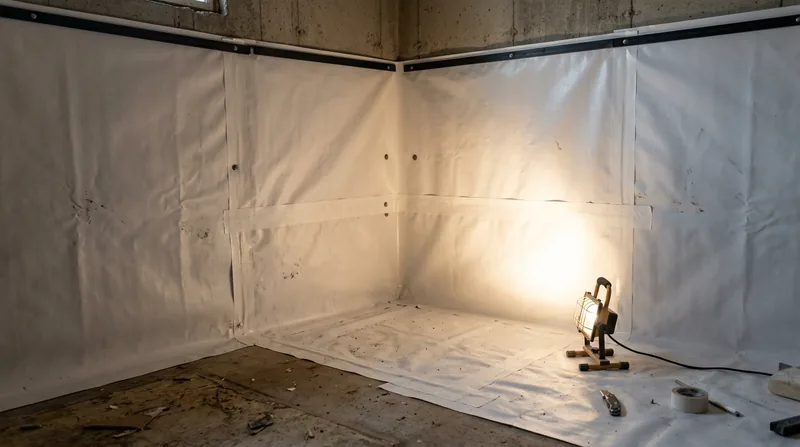




Vapor Barrier Installation in Hammond, Indiana
Hammond sits on flat glacial lake clay and sandy silt left behind by Lake Chicago, and the water table stays high most of the year. That ground holds moisture like a sponge, and it pushes vapor through stone, brick, and early block walls in the older bungalows and two-flats of Robertsdale and the east side just as steadily as it pushes liquid water through cracks. Vapor Barrier Installation in Hammond is the layer that stops that invisible moisture from loading the basement walls and slab. We install heavy-duty barrier sheets with sealed seams and taped terminations, integrated with your sump where the floor needs it. If you are already fighting seepage, start with a full basement waterproofing assessment before the barrier goes up.
Why Hammond Basements Sweat: Glacial Clay, High Water Table, and Old Walls
The soil under Hessville and the south side ranches holds water for days after a rain. When the Little Calumet or Wolf Lake backs up, hydrostatic pressure rises against the footing and vapor drives through the wall assembly. In 1940s and 1950s brick ranches with partly finished basements, that shows up as efflorescence, a musty basement smell, and paint that peels off the lower block. A vapor barrier cuts the vapor drive at the wall face and keeps the interior framing and finishes from sitting in a damp envelope.
- We seal the barrier to the wall with adhesive and mechanical fasteners so it does not billow or tear.
- We overlap and tape every seam, because an unsealed seam leaks vapor as surely as an open crack.
- We terminate the sheet into the sump basin or a sealed floor detail so water has a path out.
- We leave a drainage gap at the base where the wall can still weep behind the barrier.
Done right, the barrier works with the drain tile and sump system instead of trapping moisture behind plastic.
Key info: In a 1920s two-flat off Hohman Avenue, we found the block wall wicking vapor into a finished room while the floor stayed dry. The fix was a sealed wall barrier tied to the existing interior perimeter drain, not another coat of paint.
For the code side, the City of Hammond Building Department handles permits for work that alters drainage connections, and rules vary by jurisdiction, so verify before scheduling. You can review Indiana's contractor resources at the Indiana Professional Licensing Agency.
How We Install a Vapor Barrier in a Hammond Basement
We start by reading the moisture, not by rolling out plastic. In poured concrete basements in Schererville and St. John, the barrier plan is usually wall sheets plus a slab cover; in older block basements, we inspect for bowing wall signs and active seepage first. If the wall is moving or water is entering under pressure, a barrier alone is the wrong answer and we say so. When the wall is sound, we build the system in a fixed sequence.
- We inspect the walls, floor, and sump, and we map where vapor and water are actually entering.
- We clean and patch the wall surface so the adhesive bonds to masonry, not to efflorescence or loose parging.
- We cut and fit heavy-duty barrier sheets to the wall height and floor layout.
- We fasten and seal the top termination, then overlap and tape every vertical and horizontal seam.
- We tie the base into the sump basin or a sealed floor termination, and we test the fit before closing up.
If the inspection shows the real problem is hydrostatic pressure at the cove joint, we recommend an interior drain tile system rather than selling a barrier over a wet floor.
Key info: A split-level in Griffith had a dry floor but damp lower walls all winter. We installed sealed wall barrier sheets with a taped base termination, and the musty smell cleared once the vapor drive stopped feeding the room.
Vapor Barrier Approaches We Use in Hammond Homes
Not every basement gets the same sheet or the same detail. The table below shows the approaches we specify most often across Hammond and the surrounding towns, and what each one is built to handle.
| Approach | Description | Best for |
|---|---|---|
| Wall sheet barrier | Heavy-duty sheet fastened and sealed to the wall face with taped seams. | Block and brick walls wicking vapor into finished rooms. |
| Dimple board drainage mat | Drainage mat that holds the barrier off the wall and lets water weep down. | Walls with minor seepage that still need vapor control. |
| Slab vapor cover | Sealed sheet across the floor, lapped and taped to the wall barrier. | Poured concrete floors in 1960s to 2010s subdivisions. |
| Sump-integrated barrier | Wall and floor barrier terminated into a sealed sump basin detail. | Basements with an active sump pump and interior perimeter drain. |
We match the approach to the wall type and the water table, and we tell you plainly when a simpler crack seal is all the wall needs.
Vapor Barrier Installation Cost in Hammond: What to Expect
Most Hammond barrier work starts from $3 per square foot, and that figure moves with wall height, floor area, and how much prep the masonry needs. A clean poured wall in a Munster ranch is a different job from a crumbling parged block wall in a 1910s foursquare near Downtown. Access matters too: a finished basement with paneling and stored goods takes longer to clear and protect than a bare one.
- Wall prep and patching of loose parging add labor on older block and brick walls.
- Dimple board and drainage mat cost more than a plain wall sheet but handle minor seepage.
- Sump integration adds fittings and sealing time when the basin needs a new sealed lid detail.
- Finished basements need protection and careful reinstallation around the perimeter.
Because the spread is real, get two or three written estimates on the same scope. Our full pricing overview breaks down what each line item covers.
Choosing a Waterproofing Contractor Near Me in Hammond: What to Check
Hammond has plenty of outfits that will staple plastic to a wall and call it a barrier. The difference between that and a working system is in the seams, the terminations, and whether anyone checked the wall for movement first. Ask direct questions and read the answers, because a vapor barrier installed over an active leak traps moisture and makes the problem worse.
- Confirm the contractor is licensed and insured, and ask for a certificate before work starts.
- Get two or three estimates that describe the same scope, sheet type, and termination detail.
- Ask for local references from Hammond or a nearby town and call them.
- Ask who pulls any permit required for drainage or sump discharge work, and verify with the City of Hammond Building Department.
- Get the warranty terms in writing, including whether it transfers to a future owner.
If a bid is far below the others, ask what is missing from the seams and the base detail. You can request a free estimate and compare it line by line.
Vapor Barrier Installation in Hammond: Pricing Guide
| Service | Price | Details |
|---|---|---|
| Wall vapor barrier | Starting at $3/sq ft | Includes wall prep, heavy-duty sheet, sealed seams, and taped terminations. |
| Wall and slab barrier | Starting at $4/sq ft | Adds sealed floor cover lapped and taped to the wall barrier. |
| Dimple board drainage mat | Starting at $5/sq ft | Drainage mat plus vapor sheet for walls with minor active seepage. |
| Sump-integrated barrier | On estimate | Needs an on-site look at the basin, discharge line, and drain tile condition. |
| Travel | Included | In Hammond and surrounding areas, no separate call-out or mileage fee. |
| Estimate | Free | Response within 24h at (219) 228-8921, no obligation to book. |
Indicative pricing, the exact cost depends on square footage, finish, and site access. Free personalized estimate within 24h at (219) 228-8921.


