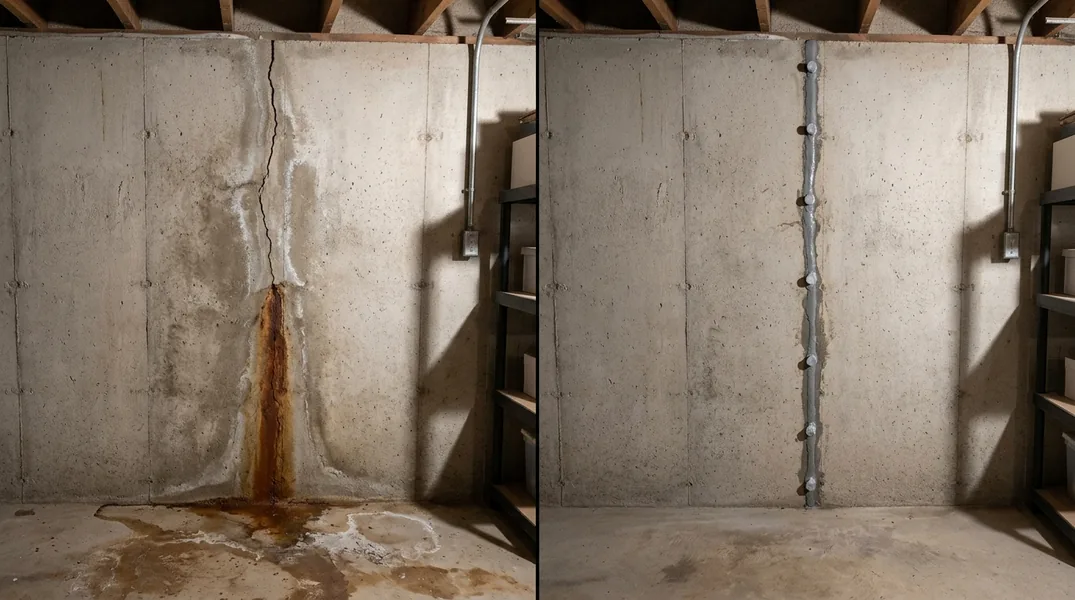
The Geology Behind Your Leaking Basement
If you live in Hammond or anywhere across Northwest Indiana, you are probably familiar with the sticky, heavy clay that dominates our region. This is lake clay, a legacy of ancient glacial Lake Chicago, and it behaves very differently from the sandy or rocky soils you might find elsewhere in the country. Lake clay has an extremely high clay content, which means it expands dramatically when it absorbs water and shrinks just as dramatically when it dries out. That constant cycle of swelling and shrinking puts enormous pressure on foundation walls, and over time, it is one of the leading causes of Hammond foundation cracks.
Compounding the problem is our high water table. In many parts of Hammond, the groundwater sits surprisingly close to the surface, especially during spring rains and after heavy summer storms. When the soil around your foundation is already saturated, water has nowhere to go but against your basement walls and under your footings. This combination of expansive clay and a high water table creates a perfect storm for lake clay soil basement leaks, and it explains why so many homeowners in the region battle damp basements, efflorescence, and cracked walls year after year.
How Indiana Soil Movement Leads to Foundation Settling
When lake clay expands and contracts, it does not do so evenly around your home. One side of the foundation may be sitting on soil that stays relatively moist, while another side dries out and shrinks. This uneven movement causes Indiana soil movement that can lead to differential settlement, where one part of your foundation sinks or shifts more than another. You might notice diagonal cracks in your drywall, doors that suddenly stick or no longer latch, or floors that feel slightly sloped. These are classic signs of foundation settling, and they are worth taking seriously before the damage becomes more expensive to repair.
The cracks themselves are not just a cosmetic issue. Once a foundation wall cracks, it creates a direct path for water to enter your basement. Even hairline cracks can let in enough moisture to cause mold growth, musty odors, and damage to stored belongings. In more severe cases, bowing walls and wide cracks can compromise the structural integrity of your home. Understanding the root cause, which is almost always the interaction between lake clay and water, is the first step toward choosing the right repair strategy. A contractor who does not account for our local soil conditions may apply a fix that fails within a season or two.
Common Hammond Basement Leak Causes You Should Know
There are several Hammond basement leak causes that we see repeatedly in homes across the area. The most common is hydrostatic pressure: water in the saturated soil pushes against your foundation walls and finds its way through cracks, cold joints, or porous concrete. Poor exterior drainage makes this worse. If your gutters are clogged or your downspouts discharge too close to the foundation, roof water compounds the problem instead of being carried away. Many older homes in Hammond also lack proper weeping tile or have clay tile systems that have collapsed or filled with roots over the decades.
Another frequent culprit is the cove joint, where the basement floor meets the foundation wall. This is a natural weak point, and under enough pressure, water can seep through it even if the walls themselves look fine. Window wells that fill with water, failed sump pumps, and cracks in the basement floor are other common entry points. Because there are so many possible sources, a proper diagnosis matters. Guessing at the cause can lead you to spend money on the wrong solution. A professional assessment will identify exactly where the water is coming from and recommend a repair that addresses the underlying issue rather than just the symptom.
Basement Waterproofing Near Me: Solutions That Work for Lake Clay
When homeowners search for basement waterproofing near me, they often find generic advice that does not account for our specific soil conditions. In Northwest Indiana, effective Basement Waterproofing has to manage both the water table and the expansive clay. One of the most reliable approaches is an Interior Drain Tile System, which captures water at the cove joint and directs it to a sump pump before it can pool on your floor. This system works well because it relieves hydrostatic pressure from inside the basement without requiring major excavation around the exterior.
For homes with more serious exterior issues, Exterior Basement Waterproofing can be the better long-term fix. This involves excavating down to the footings, applying a waterproof membrane, and installing drainage that carries water away from the foundation. It is more invasive and typically more expensive, but it addresses the problem at its source. Many homeowners in Highland and Munster face the same lake clay challenges, and the right solution often depends on the age of the home, the severity of the cracking, and the local water table. A reputable contractor will evaluate your situation and explain the trade-offs honestly.
Foundation Waterproofing and Crack Repair: Protecting Your Investment
Crack repair is often the first line of defense, but it works best when paired with a broader Foundation Waterproofing strategy. Simply filling a crack from the inside may stop the immediate leak, but if the soil pressure and water table are not addressed, new cracks will appear elsewhere. A comprehensive approach might include sealing cracks with flexible polyurethane, installing interior drainage, improving exterior grading, and ensuring that gutters and downspouts move water well away from the foundation. In some cases, foundation piers or wall anchors may be needed to stabilize a settling or bowing wall.
It is also important to think about prevention. Once your basement is dry, keeping it that way requires some vigilance. Clean your gutters at least twice a year, extend downspouts several feet from the house, and keep the soil around your foundation graded so that it slopes away from the walls. If you have a sump pump, test it before the spring rainy season and consider a battery backup. These steps are simple, but they make a real difference in a climate where the water table is never far below the surface. For homeowners in Griffith and throughout the region, a proactive approach saves money and headaches down the road.
When to Call a Professional in Hammond
Some basement moisture problems are minor and can be managed with a dehumidifier and better drainage. But if you are seeing water on the floor after every heavy rain, cracks that are widening, or walls that are starting to bow, it is time to call a professional. Ignoring these signs usually leads to more extensive and more expensive repairs later. A qualified contractor can assess your foundation, identify the specific causes, and recommend a solution tailored to the lake clay soil and high water table that define our area.
If you are ready to take the next step, Hammond Waterproofing is here to help. We understand the local geology and the unique challenges it creates for homeowners. Call us at (219) 228-8921 to discuss your situation or to request a free estimate. We can walk you through your options and provide clear pricing so you know what to expect before any work begins. A dry basement is within reach, and the right diagnosis is the first step.
Looking for a professional basement waterproofing contractor in Hammond? Hammond Waterproofing responds fast for all your basement waterproofing needs.
Get a Free QuoteOur services: Basement Waterproofing · Interior Drain Tile System · Exterior Basement Waterproofing